How to Bring Your Email Vendors into DMARC Alignment
With a DMARC record in place, you'll start seeing DMARC reports. With that information visualized in our platform, you can learn about the vendors that send email on behalf of your domain.
Sending other people’s email in a DMARC compliant manner can be accomplished in a number of different ways. Read all about it in this article.
CNAME-based delegation is when a domain owner creates several CNAMEs that point back to your own domain. In contrast with full sub-domain delegation, individual services are delegated by each CNAME.
This article expands on the "full delegation" approach described in the larger How to send DMARC-compliant email on behalf of others article.
We’ve created this guide to help you get started with your dmarcian account. dmarcian’s platform automates the collection and processing of DMARC XML reporting data to help ensure you are sending email according to best practices.
SPF can be a powerful tool for securing an email domain, but it can be misunderstood. dmarcian Deployment Manager Fred Bianchi talks about some common mistakes that result in clutter, leading to a less-than-secure SPF record.
In this article we talk about DKIM key rotation, ways of executing it, and benefits of automating the process.
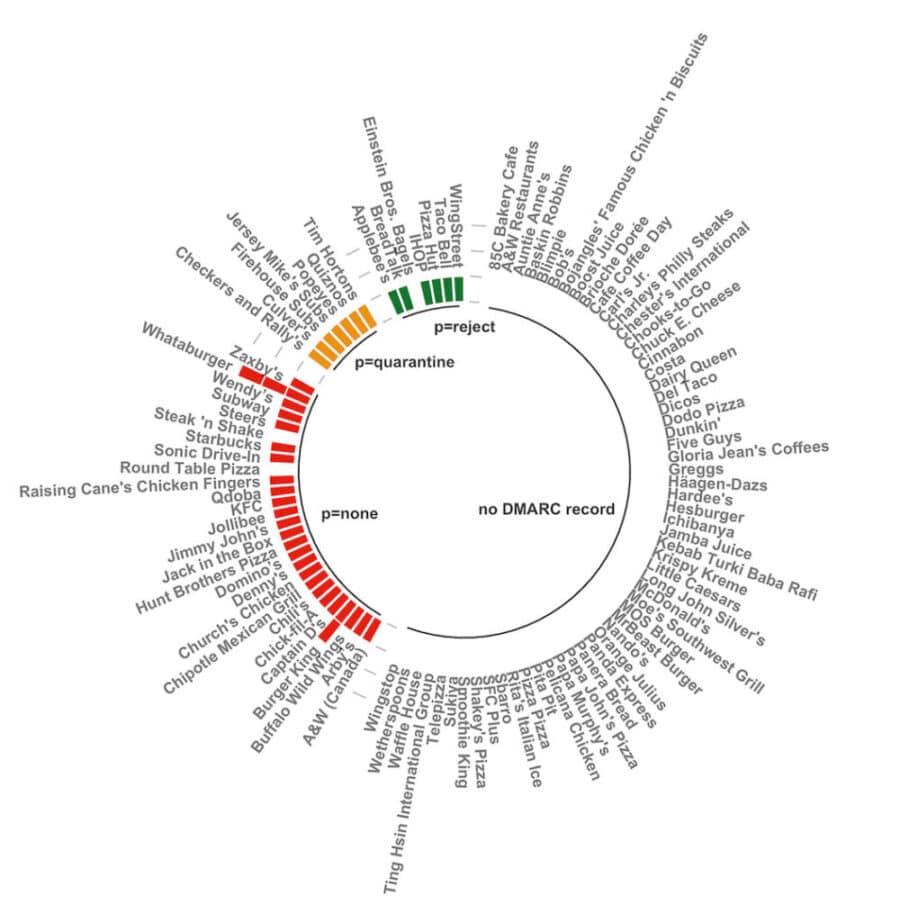
When we read the news of the McDonald’s data breach, it brought to mind the history of quick-serve joints being targeted and infiltrated.
For those of you that use Name.com as your DNS provider, here are brief instructions for publishing and adding a DMARC record.
As organizations are transforming internal processes and customer experiences in the age of digital transformation, we’re seeing security gaps develop as infrastructures migrate to the cloud.